6 Studio Kilns to Compare Before You Buy
Compare six studio kiln options for teachers, shared studios, serious potters, and small production workflows, with practical safety checks.
Disclosure: This post may contain affiliate links. If you buy through these links, PotteryKey may earn a commission at no extra cost to you. As an Amazon Associate, PotteryKey earns from qualifying purchases.
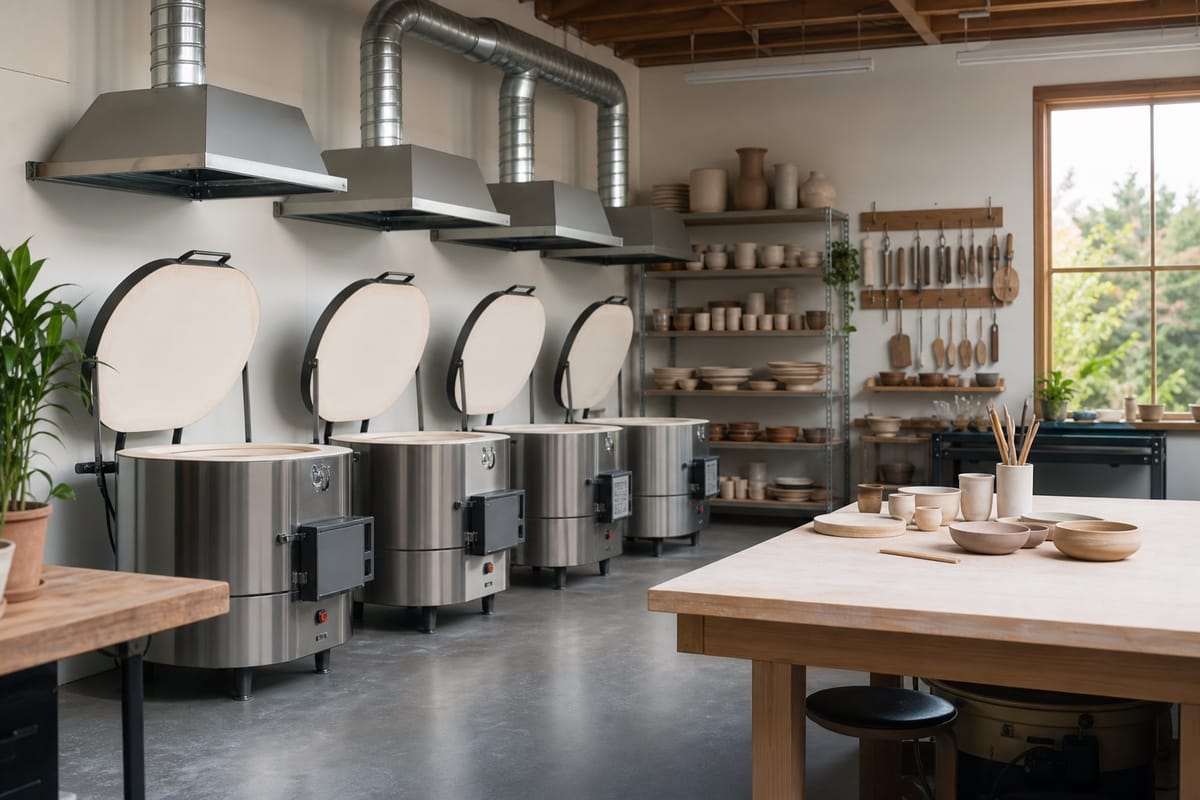
A studio kiln is more than a larger box for firing clay. It affects the pace of throwing, trimming, glazing, class turnover, member expectations, and maintenance. The right choice is the kiln that fits your regular work and your building, not the one that looks most impressive on paper.
This comparison is aimed at teachers, shared studios, serious potters, and small production spaces rather than small home setups. If you are shopping for a personal space, start with the home studio kiln guide before comparing larger studio kilns.
This guide is written for that bigger workflow. It is meant for serious potters, teachers, shared studios, and small production spaces comparing electric kiln options. If you are setting up a smaller garage or spare-room studio, start with our home studio kiln guide. If firing terms still feel slippery, review our guide to pottery firing techniques before comparing models.
Start with your firing rhythm
A kiln can solve a bottleneck or create one. Too little capacity means greenware waits, glaze loads stack up, and students or members lose momentum. Too much capacity can be just as awkward if you delay firings for days because the chamber is never full.
Before looking at listings, write down what you fire in a normal month. Note the clay bodies, glaze temperature, tallest common forms, number of shelves you tend to fill, and how often multiple people need kiln time. A teacher firing mixed student work has different needs than a production potter repeating mugs and bowls. For the broader making sequence, see our overview of how pottery is made.
Safety and installation checks before you buy
Kilns are not casual plug-in appliances. Before ordering, confirm every installation requirement with the manufacturer instructions, the current seller listing, local code, and a qualified professional. Have a licensed electrician confirm the circuit before purchase or installation.
- Electrical service: Verify voltage, phase, amperage, breaker size, receptacle or hardwire requirements, cord limits, and panel capacity. Do not assume an existing outlet is suitable.
- Ventilation and clearances: Follow the maker's clearance requirements, plan kiln ventilation where needed, and treat fire safety as part of the room layout. Keep heat, fumes, foot traffic, shelving, walls, and combustibles out of the danger zone.
- Flooring and layout: Use the stand or noncombustible surface specified by the manufacturer. Leave enough room to load, unload, inspect, and shut down the kiln without crowding.
- Kiln furniture and supplies: Shelves, posts, kiln wash, witness cones, gloves, vents, pyrometric supplies, replacement elements, and thermocouples may not be included.
- Firing limits: Match the kiln's range to your clay and glaze system. Also check whether your firing schedule is realistic for repeat studio use.
- Delivery: Larger kilns may ship by freight. Confirm delivery access, liftgate needs, damage inspection steps, and return windows before signing.
Six studio kiln options to compare
The links below are Amazon search links, not claims that a specific seller, price, warranty, controller package, or furniture kit is currently available. Use them as a starting point, then verify the current listing, manufacturer specifications, seller reputation, and installation requirements before buying.
1. Skutt KM-818
The Skutt KM-818 is a practical comparison point for potters who want a capable electric kiln without moving into a much larger studio footprint. It can suit regular functional ware, smaller dinnerware batches, glaze development, or a private studio where predictable electric firing matters more than maximum volume.
Good fit if: you fire steady small to medium loads and want room to grow without forcing the space, budget, or electrical plan into a larger class of equipment. Teachers may also compare it as a secondary kiln for make-up firings, smaller class loads, or glaze tests.
Watch for: exact electrical configuration, controller package, chamber dimensions, vent compatibility, and whether the available furniture kit fits the way you load. Measure your tallest common forms with shelf and post clearance in mind.
Check Amazon search results for Skutt KM-818 pottery kiln
2. Evenheat Studio Pro 14
The Evenheat Studio Pro 14 is better viewed as a compact specialty kiln than the main engine of a busy pottery studio. That role can still be useful. A small kiln can keep tests, small batches, decals, jewelry-scale pieces, and demonstrations from competing with the main kiln schedule.
Good fit if: you already have access to a larger kiln and want quick turnaround for small work. It may also suit a serious hobbyist who fires samples often or works at a scale where a larger chamber would sit half empty.
Watch for: usable chamber size, firing range, controller details, and current availability. Small kilns are efficient only when your actual pieces fit comfortably.
Check Amazon search results for Evenheat Studio Pro 14 pottery kiln
3. Olympic MAS1823HE
The Olympic MAS1823HE belongs on the shortlist when a compact kiln is slowing the studio down, but a large production kiln would overtake the room. It is worth comparing for studios that need more useful capacity while still keeping loading routines, heat management, and electrical planning realistic.
Good fit if: you fire student work, mixed functional loads, or recurring bisque and glaze cycles often enough that tiny kilns create delays. It may fit a small teaching studio, community workspace, or serious home-adjacent studio with consistent output.
Watch for: installation requirements, freight details, heat clearance, controller configuration, and seller documentation. If a listing is thin, verify details through current manufacturer materials instead of relying on marketplace copy.
Check Amazon search results for Olympic MAS1823HE pottery kiln
4. Paragon Caldera
The Paragon Caldera is another compact kiln that makes sense as a focused studio tool. It is not the obvious choice for large thrown forms or full class loads, but it can be useful for glaze trials, miniature sculpture, test tiles, small repairs, and teaching demos.
Good fit if: your studio needs a test kiln, demo kiln, or small unit for quick cycles that would be wasteful in a larger chamber. Beginners can also benefit from seeing firing on a manageable scale, especially alongside our beginner pottery guide.
Watch for: interior dimensions first. A compact kiln stops being practical the moment your work needs to be squeezed in. Confirm the current seller listing, controller, firing range, and accessories before calling it a studio solution.
Check Amazon search results for Paragon Caldera pottery kiln
5. L&L Easy-Fire e23T-3
The L&L Easy-Fire e23T-3 is for studios moving into a more serious repeat-use pattern. A taller electric kiln can help with larger forms, fuller shelf stacks, class work, and recurring production loads, but it also raises the stakes for power, ventilation, furniture, loading habits, and maintenance.
Good fit if: you teach regular classes, run a shared studio, or make enough functional ware that smaller kilns repeatedly limit output. It may also fit a small production potter who can fill a larger chamber consistently instead of waiting too long between firings.
Watch for: electrical service, room heat, floor and stand requirements, vent planning, furniture cost, and ongoing element or thermocouple maintenance. Larger kilns reward good loading habits and punish optimistic capacity planning.
Check Amazon search results for L&L Easy-Fire e23T-3 pottery kiln
6. ConeArt BX1822D
The ConeArt BX1822D is a serious electric kiln to compare for advanced hobbyists, teachers, and small studios that need useful capacity without overbuilding the room. It sits in the middle ground where workflow planning matters as much as the kiln model.
Good fit if: you need a regular-use studio kiln for functional ware, student pieces, glaze firings, or shared loading schedules, while keeping the size practical for the building. It is also a reasonable comparison point for potters thinking about responsible growth, including the habits covered in our guide to eco-friendly pottery practices.
Watch for: controller setup, vent compatibility, kiln furniture, element access, thermocouple maintenance, freight logistics, and manufacturer clearances. Confirm what is included before comparing it against another kiln.
Check Amazon search results for ConeArt BX1822D pottery kiln
Quick matching notes
- Serious hobbyist with steady work: Compare the Skutt KM-818 and ConeArt BX1822D first, then decide whether your normal load points smaller or larger.
- Teacher or shared studio manager: Compare the Olympic MAS1823HE, L&L Easy-Fire e23T-3, and ConeArt BX1822D around class volume, turnaround time, and installation limits.
- Glaze tester or experimental potter: Consider the Evenheat Studio Pro 14 or Paragon Caldera as a secondary kiln if test cycles are clogging the main calendar.
- Small production potter: Pay close attention to the L&L Easy-Fire e23T-3, then compare it against actual weekly output, not hoped-for future volume.
Final buying advice
A good studio kiln should make the work flow better without creating new risks for the building or the people using it. Before buying, compare current manufacturer specifications, confirm local code and professional installation needs, plan ventilation and clearances, budget for kiln furniture and maintenance, and be honest about how often you can fill the chamber. The right kiln is the one your work, your studio, and your safety plan can all sustain.