Best Pottery Kits for Beginners: A Real Starter Guide
Skip the trial-and-error. A good beginner pottery kit gets you from box to first finished piece without overbuying. Here's what to look for, and what to skip.
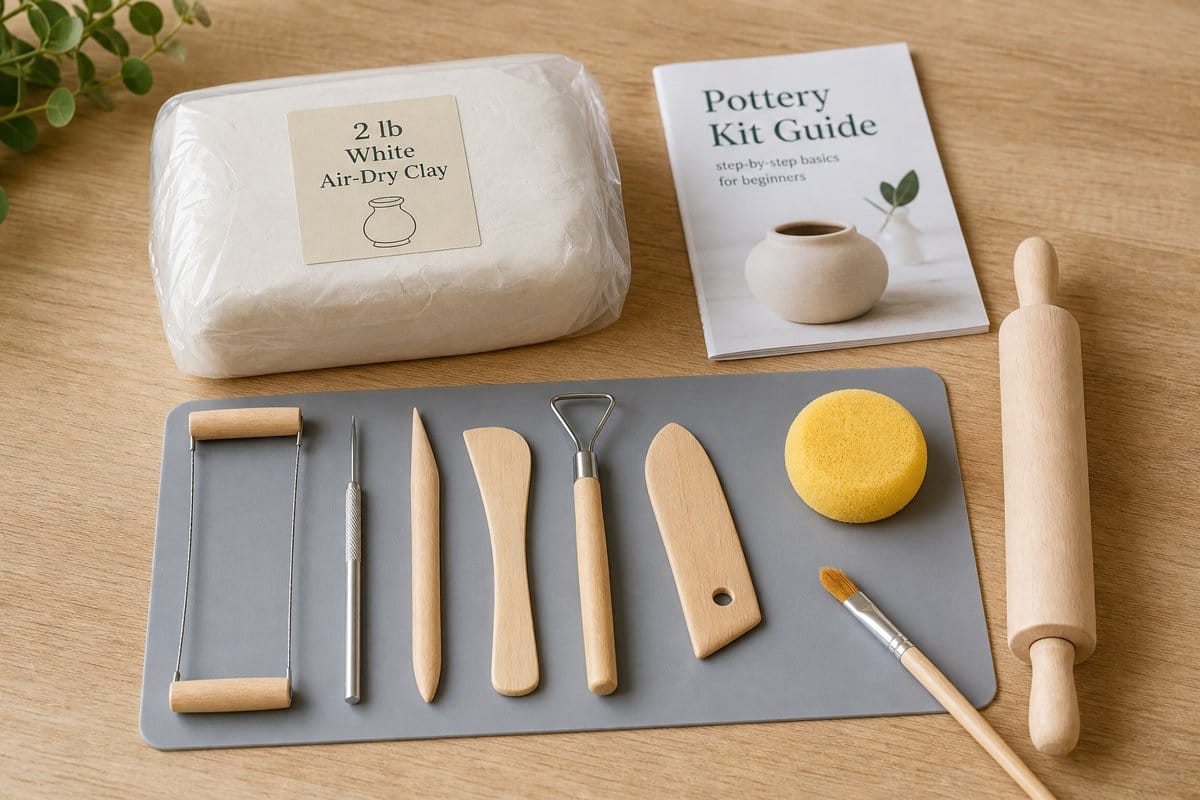
Disclosure: This post may contain affiliate links. If you buy through these links, PotteryKey may earn a commission at no extra cost to you. As an Amazon Associate, PotteryKey earns from qualifying purchases.
Most first-time potters overbuy. They get a tiny wheel, a few random tools, a single bag of clay, and a vague plan. Then they open the box, realize they do not know what to do first, and the whole thing ends up in a closet. A real beginner pottery kit fixes that. It gives you the right clay, the right tools, and a path from box to first finished piece.
This guide covers the kits that actually work for someone who has never touched clay. We will look at air-dry kits for no-kiln pottery, hand-building kits for shaping and sculpting, and wheel-included kits for people who want a small wheel to start. If you already know you want a real wheel, our beginner pottery wheel guide covers the standalone options in more detail.
Quick answer: best pottery kit for beginners
If you want a short version, here is the kit we would actually buy today for a beginner, organized by use case.
- Best air-dry starter kit: a kit with 2 to 5 pounds of air-dry clay, 6 to 10 basic tools, and a small instruction booklet. Browse air-dry clay pottery kits on Amazon.
- Best hand-building kit (no wheel): a kit with stoneware or earthenware clay and a 12 to 20 piece tool set. Browse hand-building pottery kits.
- Best wheel-included kit (kid-friendly): a small electric wheel with clay and basic tools. Browse wheel-included pottery kits for beginners.
- Best paint-and-decorate kit (gift-friendly): a pre-formed piece kit with paints, brushes, and a sealant. Browse paint-your-own pottery kits.
For a broader selection, see beginner pottery kits in general.
What to look for in a beginner pottery kit
A good kit answers four questions for the buyer: what kind of clay, what tools, what instructions, and what kind of space do you need. A kit that is vague on any of those will leave a beginner stuck.
Clay type
Most kits use air-dry clay because it does not need a kiln. That is the right choice for a first month. Once you know you like pottery, you will probably want to graduate to stoneware, which fires in a kiln and is much stronger. A kit that mentions stoneware, earthenware, or porcelain is usually a step up from the all-air-dry kits. Browse stoneware pottery clay if you want to start with the more durable option.
Tools
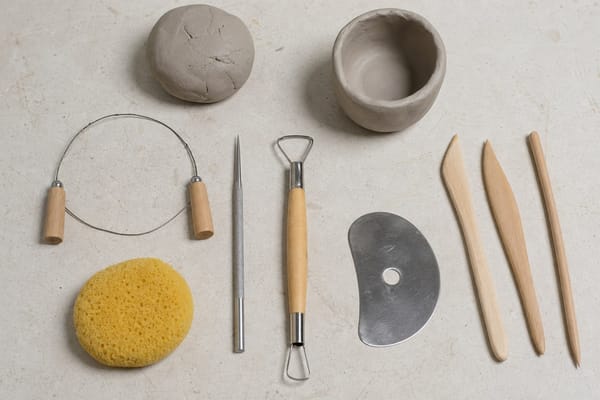
A real beginner kit has 4 to 12 tools. Less than 4 and you will be improvising with kitchen utensils. More than 12 and you will use three of them and ignore the rest. Look for a wire clay cutter, a needle tool, a rib or scraper, a sponge, and a few wooden modeling tools. Our beginner pottery tools guide walks through what each tool does.
Instructions
Most beginner kits include a small booklet. The good ones walk you through three or four projects, not just one. A kit with one project teaches you one thing. A kit with three or four projects teaches you the basics of pinch, coil, and slab construction. The instruction quality is the difference between a kit that gets you through the first week and one that sits in the closet.
Space and mess
Air-dry clay is the cleanest option. It does not need a kiln, it does not need water, and it dries on a kitchen counter. Wheel-thrown or hand-built stoneware is messier and usually needs access to a sink. If you are in an apartment, a kit that focuses on air-dry clay is the right starting point.
The four main types of beginner pottery kit
Beginner kits fall into four practical categories. Each one teaches a different skill, and the right choice depends on what you want to make first.
1. Air-dry starter kits
The cheapest, simplest option. You get clay, a few tools, and basic instructions. Pinch pots, small bowls, and decorative pieces are realistic. Larger functional pieces are not, because air-dry clay is brittle. This is the right kit for a first-time potter who wants to see whether they enjoy the craft. Browse air-dry pottery kits for beginners.
2. Hand-building kits (no wheel)
For a more serious start, hand-building kits include stoneware or earthenware clay, a wider tool selection, and usually better instructions. You will need access to a kiln to finish the pieces, which means a community studio or a friend with a kiln. The kit itself is the right answer if you already know you like clay and want to make durable pieces.
3. Wheel-included kits
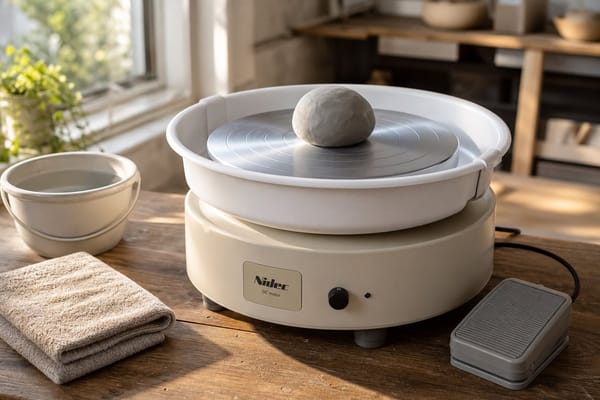
A small electric wheel plus a basic tools set and clay. The wheel in these kits is usually toy-grade, so it works for the first month but does not have the stability or torque of a real starter wheel. If you know you want a wheel, our standalone pottery wheel guide is the better starting point. Browse mini pottery wheel kits if a kit is what you prefer.
4. Paint-and-decorate kits
Pre-formed bisque pieces, paints, brushes, and a sealant. No clay shaping. This is the right kit for a gift, a kid, or a beginner who wants to focus on decoration rather than construction. The pieces are real ceramic, so they are durable, but you are not learning to throw or hand-build. Browse bisque pottery painting kits.
What to skip at the start
A few kit patterns look appealing in product photos but cause problems for beginners.
- Anything with a plastic wheel. A plastic wheel head warps over time and makes centering impossible. Most plastic-wheeled kits are toys, not real pottery equipment.
- Kits with no project instructions. If the kit ships with clay and tools but no booklet, you will end up on YouTube anyway. Save the money and just buy the tools separately.
- Giant kits with 40+ tools. Most beginners use 5 to 8 tools regularly. A 40-tool kit is overwhelming and most of the tools will collect dust for years.
- Kits that promise to teach you to throw in a day. Throwing is a skill that takes weeks. Any kit that promises instant results is overpromising.
Setting up your first pottery space
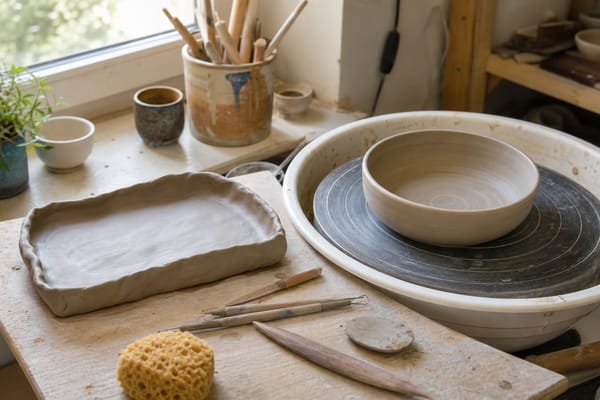
You do not need a dedicated studio for your first kit. A kitchen counter, a small table, or a corner of a craft room is enough. A few practical things to plan for:
- A wipeable surface. A small silicone mat, a cookie sheet, or a piece of MDF will save your table.
- A small bowl of water. For smoothing clay and cleaning tools.
- A rag or two. For drying hands and wiping up slip.
- Storage for unused clay. Air-dry clay keeps for months in a sealed bag. Stoneware clay needs to stay moist.
Combining a kit with a tools guide
Most beginner kits include 4 to 8 tools, which is enough to get started. Once you have finished your first project, you will probably want a few more. Our beginner pottery tools guide covers the full tool kit and what each tool does. The short version is: add a loop tool, a trimming tool, and a smaller sponge. That set, plus what came in the kit, will carry you through the first six months.
When to upgrade from a kit to real equipment
A few signs you are ready to move beyond a kit:
- You have finished the projects in the kit and want more.
- You are buying clay separately because the kit amount is too small.
- You are looking at tools the kit did not include.
- You are taking a class or watching throwing videos and want a wheel.
When that happens, the next move is usually a real starter wheel plus a basic tools set, or a community studio membership. Either of those will take you further than another kit. If you are buying for a kid who is showing real interest, our beginner pottery for kids guide covers the age-appropriate next steps.
Frequently asked questions
What is usually in a beginner pottery kit?
A typical beginner kit includes clay, 4 to 12 basic tools, a sponge, a small mat, and a booklet. Wheel-included kits add a small electric wheel. Paint kits add paints and brushes.
Do I need a wheel to use a pottery kit?
No. Most beginner kits focus on hand-building. A small electric wheel is optional and usually sold separately.
Is air-dry clay good for beginners?
Yes, for the first month or two. It is cheap, easy to find, and works without a kiln. For durable pieces, graduate to stoneware once you have studio access.
How much should a beginner pottery kit cost?
A solid beginner kit runs $20 to $60. The sweet spot is $30 to $50, which usually includes decent clay, a usable tool set, and a clear instruction booklet.
Can kids use an adult beginner pottery kit?
Yes, with supervision. Most beginner kits work for ages 8 and up. Younger kids do better with paint-and-decorate kits or kid-specific options.
A good beginner pottery kit is the cheapest, fastest way to find out whether you like this craft. Start with an air-dry hand-building kit in the $30 to $50 range, work through the projects in the booklet, and add tools and a wheel only when you know you want more. The kit is the on-ramp, not the destination.