Best Pottery Tools for Beginners: What You Actually Need First
Build a practical beginner pottery tool kit with the clay tools you will actually use for cutting, shaping, smoothing, trimming, carving, and cleanup.
Disclosure: This post may contain affiliate links. If you buy through these links, PotteryKey may earn a commission at no extra cost to you. As an Amazon Associate, PotteryKey earns from qualifying purchases.
Shopping for the best pottery tools for beginners can get confusing fast. One kit has 8 pieces. Another has 30. Another has more than 40 small sculpting tools that look useful, but also a little overwhelming if you are still learning how clay behaves.
The good news is that beginners do not need a huge pottery tool kit to start. A few well-chosen clay tools can take you through pinch pots, coil pots, slab projects, simple wheel throwing, trimming, smoothing, and basic decoration. The goal is not to own every tool on day one. The goal is to buy tools you will understand, use, clean, and keep within reach.
This guide breaks down a practical beginner pottery tools list, what each tool is for, which kits are a good fit for different beginners, and what you can skip until later. If you are brand new to the whole process, you may also want to read our guide to pottery for beginners before choosing supplies.
Quick answer: best pottery tools for beginners
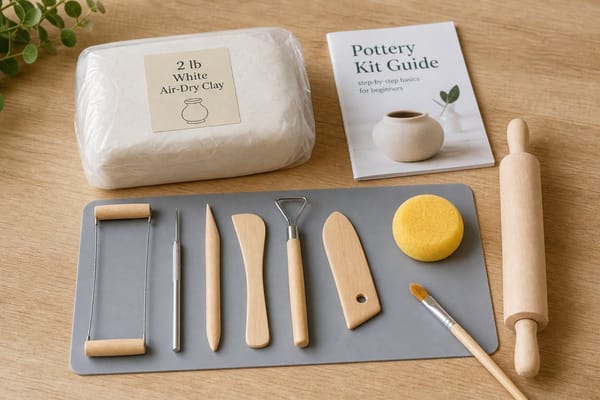
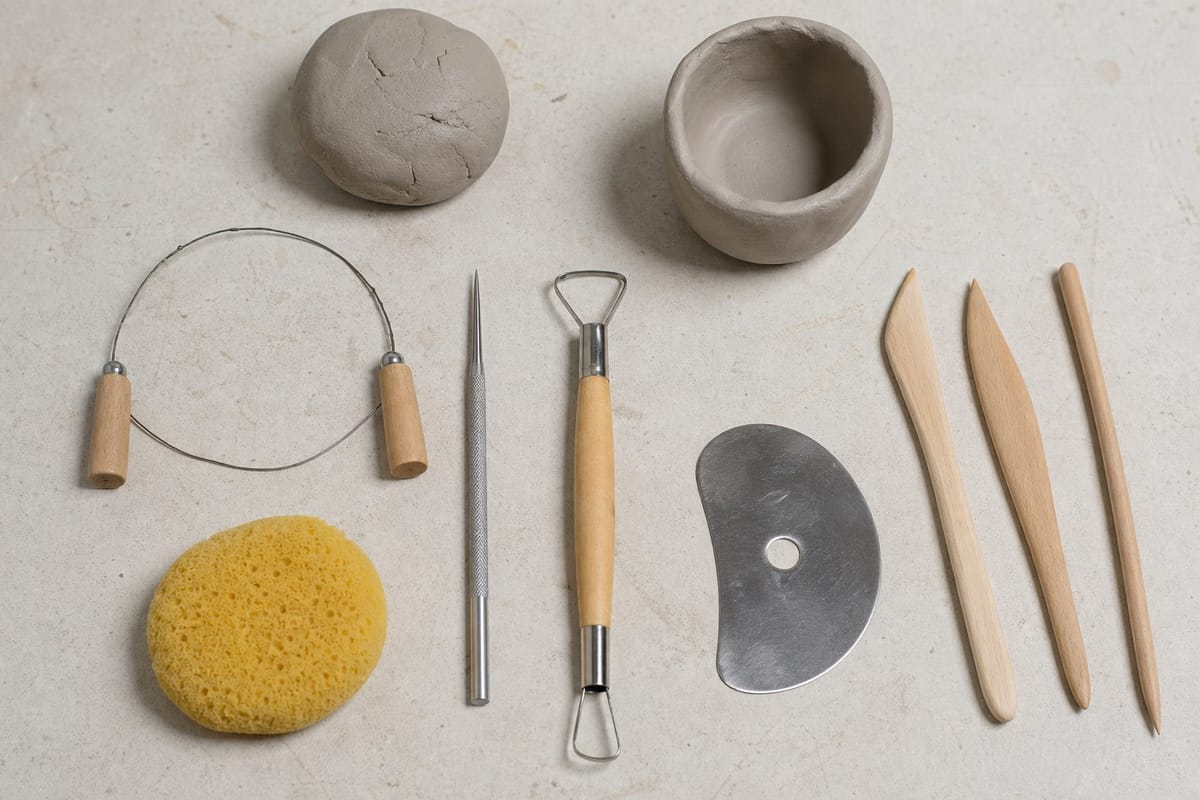
If you want the simplest starting point, begin with a small kit that includes a wire clay cutter, needle tool, rib or scraper, sponge, trimming or loop tool, wooden modeling tools, and a few basic sculpting tools. That gives you enough range to cut clay, refine shapes, smooth surfaces, trim edges, and add simple details.
For most beginners, an 8-piece set is enough for the first few projects. A 30-piece or fuller pottery tool kit can be a good upgrade if you want more variety for carving, texture, and hand-building. A 42-piece or 43-piece set is better for people who already know they want to focus on detail work, miniatures, texture, or decorative surfaces.
Here is the short version:
- Best simple starter option: an 8-piece pottery tool kit.
- Best all-around upgrade: a 30-piece or fuller set with cutting, shaping, carving, and cleanup tools.
- Best for detail work: a larger sculpting tools set with many small tips and carving shapes.
- Best first extras: sponge, towel, apron, small bucket of water, and a safe surface to work on.
What comes in a beginner pottery tool kit?
A handheld pottery tool kit is different from a full pottery setup. Clay, a pottery wheel, kiln access, glazes, an apron, towels, buckets, and sponges all matter, but they are not always included in the same kit. Some sets include an apron or cloth, while others focus only on hand tools.
When comparing beginner pottery tools, look for these core pieces:
- Wire clay cutter: used to slice clay from a block and remove thrown pieces from the wheel.
- Needle tool: used for scoring, piercing air holes, measuring depth, trimming rims, and marking lines.
- Pottery rib: used to smooth, compress, shape, and scrape clay. Ribs may be wood, metal, rubber, or plastic.
- Loop tool: used for trimming, hollowing, carving, and removing clay from leather-hard pieces.
- Wooden modeling tools: useful for shaping, joining, smoothing seams, and refining hand-built forms.
- Sculpting tools: used for carving, texture, small details, and decorative marks.
- Sponge: used for moisture control, smoothing rims, cleaning slip, and softening edges.
- Scrapers: used to clean surfaces, refine slab work, and compress clay.
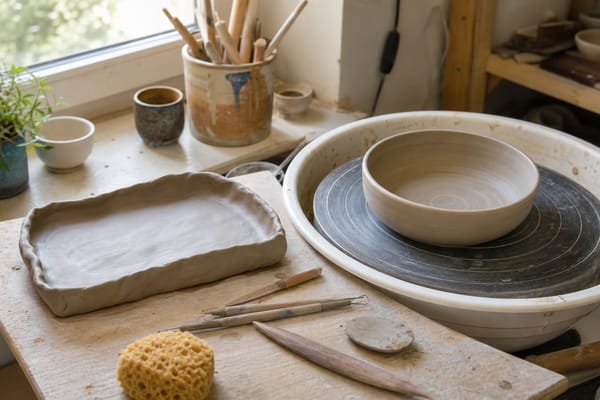
If you plan to work without a pottery wheel, many of these same tools still apply. Hand-building uses simple tools very well, especially for pinch pots, coils, slabs, texture, and small sculptural forms. For help choosing between methods, see pottery wheel vs hand building.
Best pottery tool kits for beginners
SE 8-piece set: best simple starter kit
The SE 8-piece set is a good fit if you want to start small and avoid tool overload. A compact kit is often better for a true beginner because it forces you to learn what each tool actually does. Instead of sorting through dozens of similar shapes, you can practice cutting, shaping, smoothing, trimming, and simple decoration with a manageable set.
This type of kit works well for basic hand-building, beginner wheel practice, class use, and small home projects. It is especially useful if you are still figuring out whether pottery will become a long-term hobby.
Good fit if: you want a basic pottery tools list in one small kit, you are taking a first class, or you want to keep your setup simple.
Watch for: small kits usually have fewer decorating options. If you already know you want to carve patterns, add texture, or work on small details, you may outgrow this style of kit quickly.
ISSEVE 43-piece set: best fuller starter set with carrying case
The ISSEVE 43-piece set is a better fit if you want more than the bare basics and prefer a kit with a carrying case. It gives beginners a wider range of carving, shaping, smoothing, and modeling tools without requiring you to buy each piece separately.
A larger set like this can be useful once you move beyond your first pinch pot or slab tray and start asking, “How do I clean this edge?” or “How do I add a better curve here?” It is not something you need to master all at once. Pick a small handful of tools first, then add the rest into your routine as you understand what each shape does.
Good fit if: you want one fuller bundle for regular practice, hand-building, small sculptural pieces, and surface details.
Watch for: large sets can feel like too much at first. Check the current product listing before buying so you know exactly which tools and accessories are included.
Meuxan 30-piece set: best variety without going too far
The Meuxan 30-piece set sits in a practical middle zone. It gives you more choices than a basic 8-piece kit, but it is not as specialized as a large sculpting-only set. For many beginners, this is the point where a pottery tool kit starts to feel useful for different project styles.
With a broader selection of shaping, cutting, trimming, and sculpting tools, a 30-piece set can support pinch pots, coil pots, slab building, texture experiments, and simple wheel-thrown pieces. It is also a reasonable upgrade if you started with a class kit and now want your own tools at home.
Good fit if: you want to explore more clay tools without buying separate pieces one at a time.
Watch for: some tools in larger kits may be smaller or more delicate than expected. Before buying, check the product photos, tool lengths, handle shapes, and whether the set includes the specific items you care about, such as a needle tool, loop tool, and wire clay cutter.
Arteza 42-piece set: best for detail and sculpting
The Arteza 42-piece set makes the most sense if you are interested in sculpting tools, surface decoration, and fine detail. It gives you many different tips and shapes for carving, pressing, smoothing, and refining small areas.
This is not the first set every beginner needs. If your main goal is to make simple bowls, mugs, pinch pots, or slab trays, a smaller pottery tool kit may be easier to use. But if you are drawn to texture, figurines, decorative tiles, tiny details, or carving into leather-hard clay, a larger sculpting set can be useful.
Good fit if: you care more about detail work than basic setup, or you already have a wire clay cutter, sponge, and general shaping tools.
Watch for: larger sculpting sets may not include every basic pottery tool. Check whether the kit includes a wire clay cutter, pottery rib, and trimming tools, or whether it focuses mostly on decorative tips.
What to buy first
If you are building your first pottery tool kit, start with the tools that solve the most common beginner problems: cutting clay cleanly, controlling moisture, smoothing rough edges, joining pieces, trimming extra clay, and adding simple marks.
A smart first setup looks like this:
- A wire clay cutter for slicing clay and removing pieces from the wheel.
- A needle tool for scoring, piercing, measuring, and marking.
- A pottery rib for smoothing, compressing, and shaping.
- A loop tool for trimming and hollowing.
- A sponge for water control and cleanup.
- A few wooden modeling tools for seams, rims, and hand-built forms.
- One or two sculpting tools for simple texture and decoration.
If you are unsure, a basic set is the safest place to begin. Learn those tools first. Once you know what you keep reaching for, it becomes much easier to decide whether you need a 30-piece kit, a dedicated carving set, or just one better rib.
What you can skip at first
Beginners can skip many specialty tools at the start. You probably do not need a full drawer of tiny sculpting tips, multiple calipers, advanced trimming tools, expensive ribs in every material, or a large set of duplicate carving shapes right away.
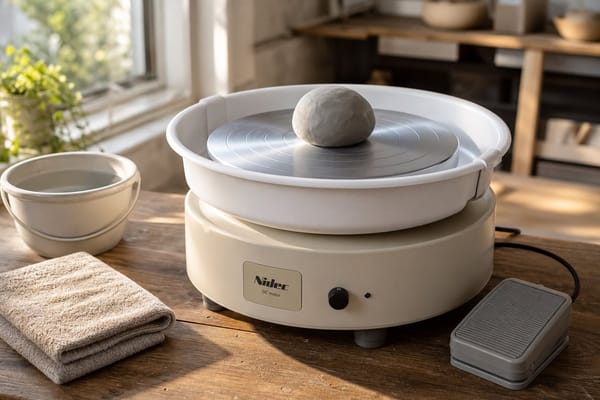
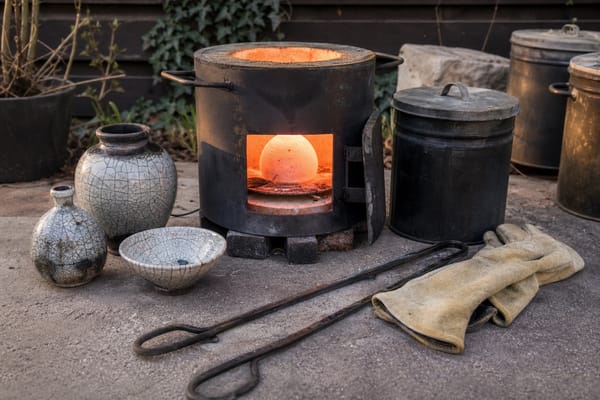
You can also wait on buying a pottery wheel or kiln if you are not ready for the space, cost, and learning curve. Many beginners start with hand-building, then use kiln access through a class, local studio, school, or community art center. If you want to understand the full process from clay to fired piece, read how pottery is made.
Some simple tools can even be made at home. A clean plastic card can become a soft rib, and household objects can create texture stamps. For safe ideas, see how to make simple pottery tools at home. Sharp tools, wire cutters, loop tools, and kiln-related equipment are usually better purchased than improvised.
How to choose between small, mid-size, and large tool sets
Choose an 8-piece set if you are brand new, taking a first class, or trying pottery on a small budget. It is easier to learn one tool at a time, and you will not waste energy sorting through tools you do not understand yet.
Choose a fuller set with a carrying case if you want more tools for organization, shaping, and cleanup. This can be a good home option if you do not want to buy each accessory separately.
Choose a 30-piece set if you want a practical balance of beginner tools and creative options. This is a strong choice for someone who has made a few pieces already and wants more carving, shaping, and decorating possibilities.
Choose a 42-piece sculpting set if your main interest is detailed surface work. It can be very useful, but it may be overkill if you only need a wire cutter, rib, sponge, needle tool, and a few shaping tools.
Final recommendation
The best pottery tools for beginners are the ones that help you practice more, not the ones that make your toolkit look impressive. Start with a small, useful set if you are new. Move up to a 30-piece or fuller pottery tool kit when you want more options. Save the larger sculpting tools set for detail work, carving, and decoration.
If you are still learning basic pottery techniques, focus on simple projects and repeat them. Pinch pots, coils, slabs, stamping, and basic carving will teach you more than owning every tool at once. For project ideas, see these easy pottery techniques for beginners.
Start simple, keep your tools clean, and notice which clay tools make the process easier. That is the best way to build a pottery kit you will actually use.
What is new in 2026
The beginner pottery tool market has not changed dramatically in 2026, but a few things are worth knowing if you are shopping now.
- Brush-on kiln glazes are more beginner-friendly than ever. Pre-mixed brush-on glazes have gotten cheaper and more consistent, and most beginner tool kits now link to compatible low-fire brush-on glazes in the $15 to $30 range. If your kit is missing a glaze step, search for a low-fire brush-on pottery glaze that matches your clay type.
- Wooden modeling tools are still the standard, but silicone-tip tools are gaining ground. Silicone tips are easier to clean and last longer than wood in damp studio conditions. Browse silicone pottery modeling tools to see the current options.
- Cleanup and storage accessories are easier to find. A few years ago, finding a good pottery-specific cleanup kit meant buying a wheel-throwing starter bundle. Now, simple pottery cleanup sponge sets and pottery tool roll bags are widely available in the $10 to $25 range.
- Wheels and kits are not the only path anymore. If you have been thinking about adding a wheel to your hand-building practice, our beginner pottery wheel guide walks through the realistic options in the $250 to $600 range, including which features actually matter and which are overhyped.
- Kits are still the easiest on-ramp. If you want everything in one box, our beginner pottery kit guide covers air-dry, hand-building, wheel-included, and paint-and-decorate options, with what to skip and what to actually look for.
None of this changes the core advice in this guide. Start with a small, useful set. Move up when you know what you want. Save the larger kits for detail work, and only buy specialty tools when you have a real project in mind.
Pottery painting tools: a practical beginner setup
If you want to paint or decorate clay, add a small painting kit to your basic pottery tools. You do not need a large brush collection. A practical starting setup is:
- Two or three soft brushes: a small round brush for lines and details, a medium round brush for small shapes, and a flat brush for bands or broad coverage.
- A palette: use a smooth tile, ceramic dish, or palette made for art materials so you can mix small amounts without chasing paint across the table.
- A water cup and clay-only sponge: keep one cup for rinsing brushes and a clean sponge nearby for small corrections and moisture control.
- A pencil or removable guide: sketch the layout lightly where the surface and product instructions allow it, then test the design on paper or a spare tile first.
- Masking tape or a simple ruler: useful for straight bands and repeat spacing, but remove tape carefully before the surface finish dries or fires.
Match the decorating material to the clay stage. AMACO's beginner ceramics guide explains that underglazes can be used on greenware and bisque when the manufacturer's directions are followed. That does not make every painted surface food-safe: for mugs, plates, and bowls, follow the complete product and firing guidance for the specific piece.
For project ideas, see our guides to pottery painting ideas and paints that work best on pottery. If you are still building the rest of your setup, the beginner pottery guide covers the wider process.