What to Look For When Buying a Pottery Wheel for the First Time
A practical beginner checklist for choosing a first pottery wheel, including wheel type, speed control, wheel head size, cleanup, space, tools, clay, and budget.
As an Amazon Associate, PotteryKey earns from qualifying purchases.
Buying your first pottery wheel is a fun step, but it can also turn into an expensive guess if you start with product listings instead of your real setup. The right beginner wheel is not the one with the loudest claims. It is the one you will actually use: steady at slow speeds, comfortable for your body, realistic for your space, and easy enough to clean that you do not dread practice.
Before you compare carts and motors, slow down and answer a few basic questions. Where will the wheel live? How often will you throw? What size pieces do you want to make? Where will the pots be fired after they dry? If you are still weighing wheel throwing against hand-building, read this guide to pottery wheel vs. hand-building first. You may decide a wheel is the right next step, or you may get more from classes, coils, slabs, and pinch pots for now.
Start with what you want to make
A pottery wheel is mainly for round forms: mugs, bowls, vases, jars, planters, and plates. If those are the pieces you picture yourself practicing, a wheel makes sense. If you are more interested in sculpture, tiles, ornaments, or textured wall pieces, hand-building supplies may be a better first purchase.
For a beginner, the real test is not whether a wheel looks professional in a studio photo. It is whether it supports steady practice. You want to center small amounts of clay without fighting the machine, slow the wheel down without pulsing, and clean up without turning the room into a slip-covered project. A modest wheel used often will teach you more than a more expensive wheel that feels annoying to set up.
Electric wheel or kick wheel?
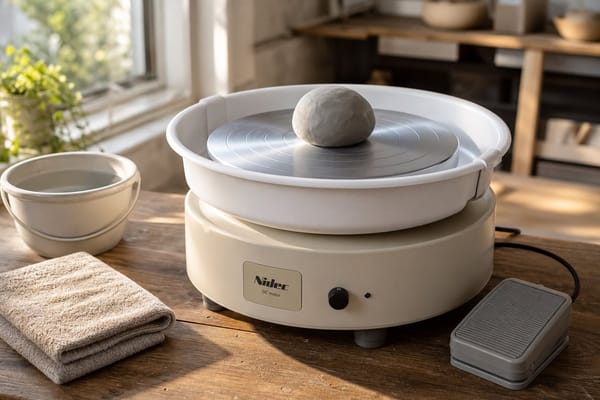
Most first-time buyers are better served by an electric pottery wheel. It fits more easily into a home studio, garage, classroom corner, or shared creative space, and it is simple to start and stop during short practice sessions. Electric wheels usually use a foot pedal, hand control, or both. If you are browsing, start broad with a search for pottery wheel for beginners instead of locking onto the first listing that looks polished.
Kick wheels have their own appeal. They are quiet, physical, and controlled by leg motion through a heavy flywheel. Some potters love that rhythm. For most beginner homes, though, they are large, heavy, and harder to place. They can also be tiring in longer sessions. If you have knee, hip, or back concerns, try one in a class before buying. For a first home setup, an electric wheel is usually the simpler choice.
Put speed control ahead of looks
Wheel throwing depends on small speed changes. Centering often uses more speed than pulling walls, while trimming and detail work need a slower, steadier turn. Read product descriptions and reviews for comments about smooth starts, low-speed consistency, pedal response, vibration, and whether the wheel feels jumpy.
Do not let one dramatic headline number make the decision for you. Check the stated clay capacity, recommended use, wheel head size, documentation, setup instructions, and return policy. A beginner does not need the strongest wheel available, but the wheel should not stall during normal beginner projects. Clear instructions and a seller policy you understand are worth more than vague promises.
Choose tabletop or freestanding
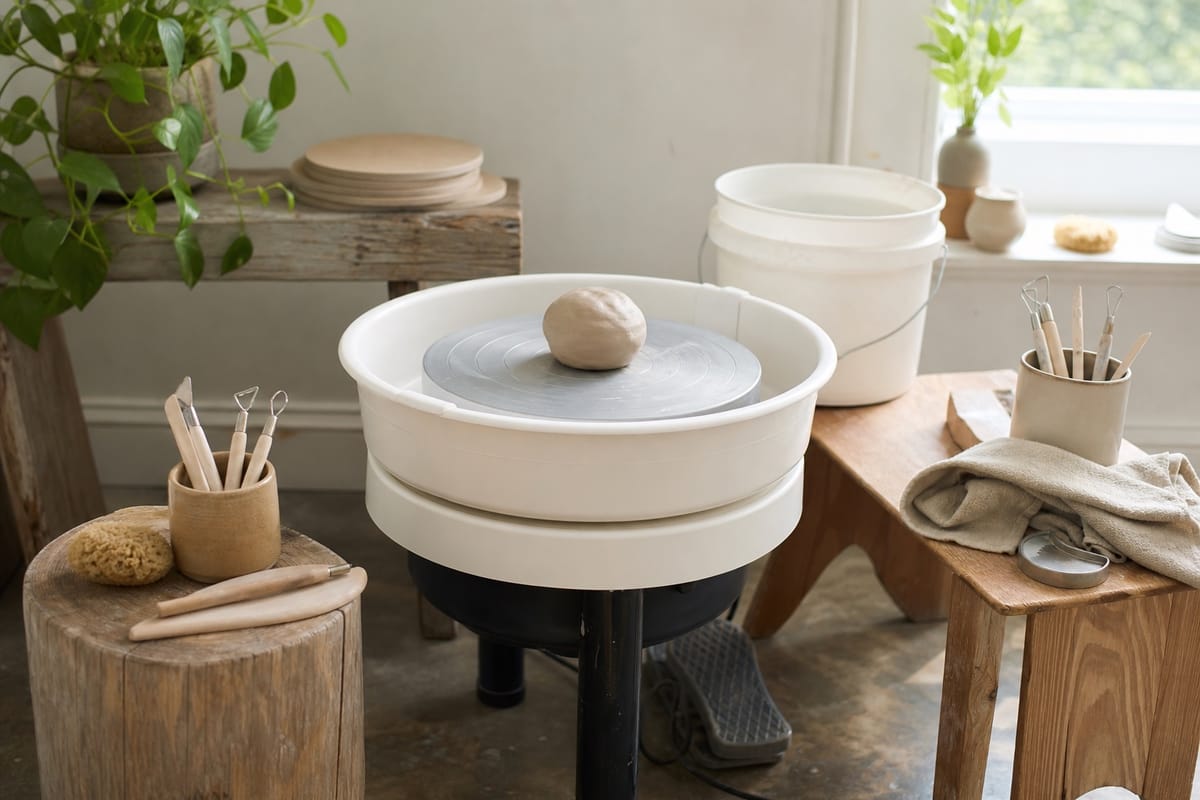
A tabletop wheel can work well in a small space or apartment, especially if you need to store it between sessions. It still needs a sturdy table or bench at a comfortable height. You also need room for splash, clay trimmings, a water bucket, and tools. To compare compact options, use a broad search such as tabletop pottery wheel.
A freestanding wheel usually feels more stable and can be more comfortable for longer practice. It takes more floor space, but the throwing position is often easier to repeat. Measure the wheel footprint before buying, then add space for a stool, water, clay, tools, bats, and somewhere to set wet pots. If you cannot sit with relaxed shoulders, stable feet, and your hands at a comfortable height, even a good wheel will feel harder than it should.
Check the wheel head and bat options
The wheel head is the round metal surface your clay sits on. A larger wheel head gives you more working room, but it should match the pieces you plan to make. Smaller wheels can be fine for cups and small bowls. Plates and serving bowls need more room and more stability.
Look for bat pins or a compatible bat system. Bats are removable discs that let you lift a freshly thrown pot without handling the soft piece directly. They are especially useful for plates, low bowls, and delicate rims. If the wheel does not include bats, compare a pottery wheel bat system that matches the wheel's pin spacing and size before you buy.
Make cleanup part of the decision
Cleanup is not a side issue. It is part of wheel throwing every time you practice. A removable splash pan helps contain slip and trimmings, but some pans are easier to remove, rinse, and reattach than others. Look for smooth surfaces, accessible corners, and a setup you can clean without carrying a muddy wheel across the room.
Never pour clay water down a household drain. Let the heavier clay settle in a bucket, pour off clearer water when appropriate, and dispose of settled clay according to your local rules. A simple habit helps: keep one bucket for throwing water and another for rinsing tools. It is not glamorous, but it can save you from plumbing trouble.
Think about noise, storage, and moving the wheel
If you live with family, roommates, or close neighbors, noise affects how often you will practice. Reviews may mention motor hum, vibration, pedal noise, or wobble. The surface matters too. A quiet motor will not help much if the table shakes every time you center clay.
Portability is a tradeoff. A lighter wheel is easier to move, but it may feel less planted. A heavier wheel can feel steadier, but only if you have a place to leave it set up. Decide before buying whether the wheel will stay out or be packed away after each session. If storage matters, check the weight, handles, cord storage, and whether the splash pan comes off easily.
Budget for tools, clay, and firing
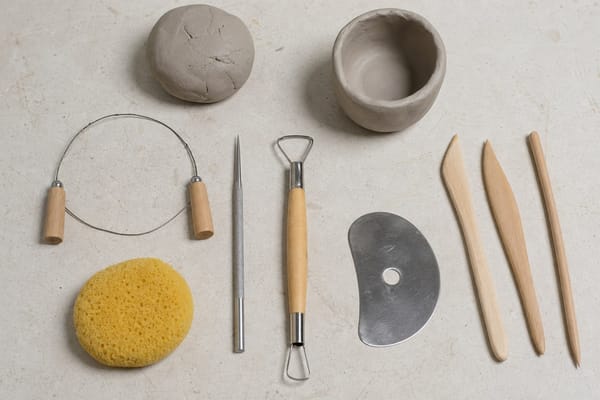
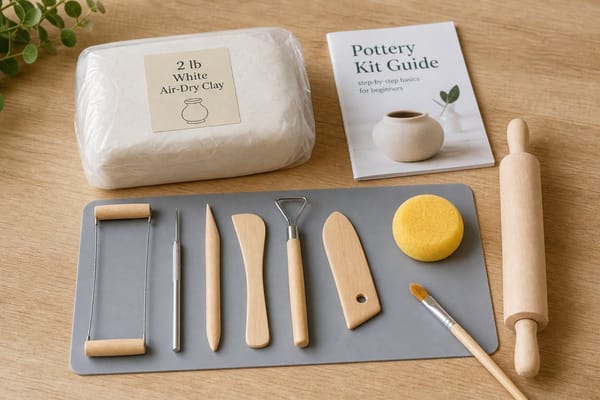
A wheel alone is not a working setup. You will need clay, a wire cutter, ribs, a needle tool, sponges, trimming tools, towels, buckets, bats, and a safe place for wet work. If you are building a starter kit, this guide to the best pottery tools for beginners explains what to buy first and what can wait. You can also compare broad searches for pottery wheel tools and pottery clay for wheel throwing.
Choose clay that matches your firing option. If you use a community studio, ask which clay bodies and cone temperatures they allow. If you are working at home, remember that wheel-thrown pottery still needs a suitable kiln to become functional ceramic ware. Air-dry clay can be shaped, but it is not the same as fired stoneware or porcelain.
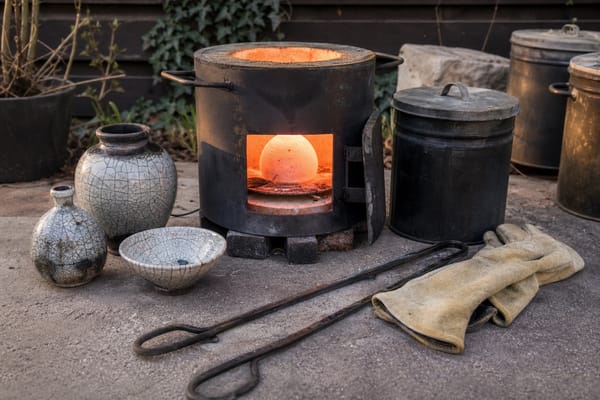
Your budget should also include shipping, drying boards or shelves, cleanup supplies, and firing fees. If you eventually want to fire at home, read about kilns for home studios before assuming a kiln will fit your space, power supply, and ventilation needs. If you are still mapping out the whole hobby, this guide to pottery for beginners is a useful place to zoom out. If you like making simple supplies yourself, you can also learn how to make pottery tools at home.
Questions to ask before buying
- Where will the wheel stay while you use it, and where will it be stored?
- Can you sit at the wheel with relaxed shoulders and stable feet?
- Does the wheel offer smooth low-speed control?
- Is the wheel head large enough for the pieces you want to make?
- Does it accept bats, and are compatible bats easy to find?
- Can you remove and clean the splash pan easily?
- Do you understand the return policy, shipping cost, and setup instructions?
- Where will you fire your work once it is dry?
Bottom line
The best first pottery wheel is not always the biggest or most expensive one. It is the wheel that fits your space, gives you steady control, cleans up without stress, and supports the projects you want to practice. Start with realistic goals, compare broad categories, and leave room in your budget for clay, tools, bats, and firing. A thoughtful first setup makes it much easier to keep throwing instead of second-guessing the purchase.