Unique Artisan Pottery Vases: Perfect Wedding Decor for Rustic Charm
Discover how artisan pottery vases can add a unique and eco-friendly touch to your wedding decor. Find tips for choosing and incorporating them into your big day.
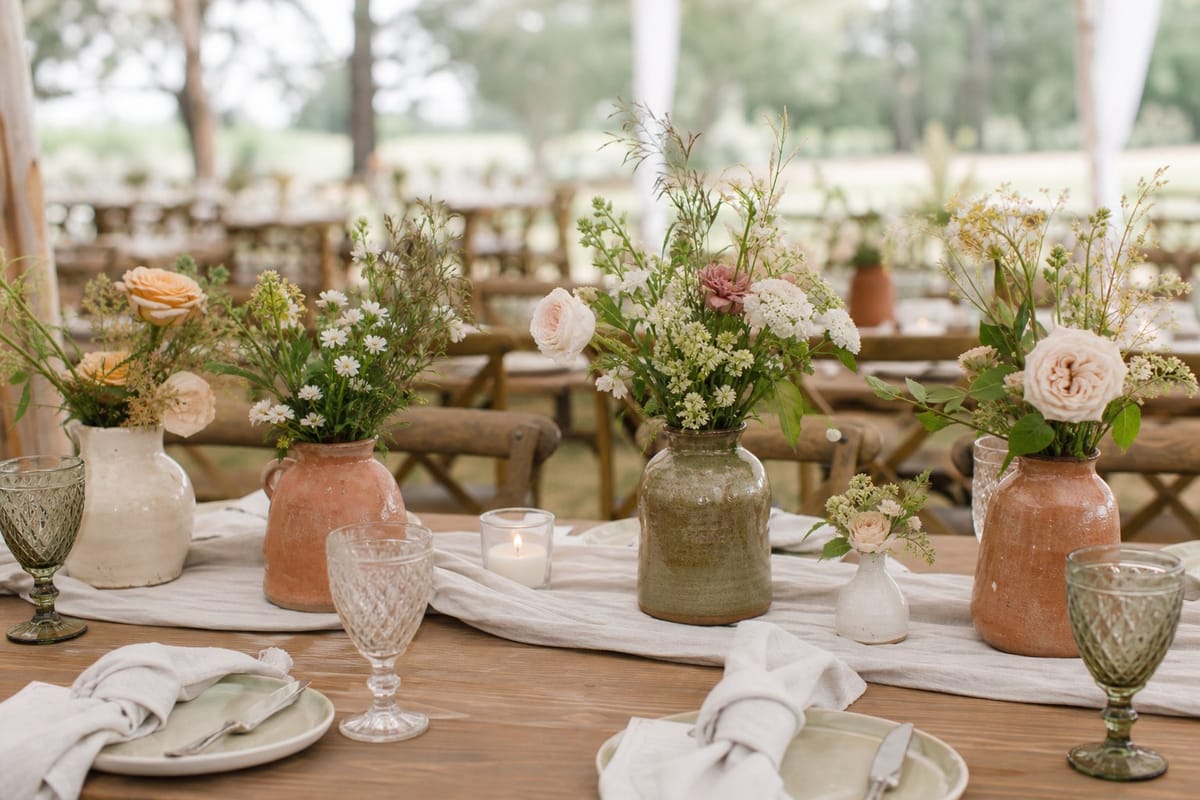
Artisan pottery vases are a good fit for wedding tables because they do useful work. They hold water, add weight, bring in texture, and give simple flowers a more finished look. They are especially easy to picture at barn, garden, backyard, and small restaurant weddings, but the same rules apply anywhere: choose pieces that fit the table, keep sight lines open, and make sure the flowers have enough support.
The best pottery centerpieces usually look quiet, not random. A few well-chosen shapes in related glazes will feel more intentional than a table full of unrelated pieces. Before you think about color, decide what each vase needs to do: hold one stem, anchor a loose garden arrangement, mark a bar corner, or create a low cluster down a long table.
Why pottery vases work for rustic and handmade weddings
Pottery sits naturally with wood tables, linen runners, wildflowers, fruit, candles, and greenery. Matte clay, speckled glaze, and small variations in the rim or curve soften a table in a way clear glass often does not. The result can feel relaxed without looking unfinished.
Pottery can also be a practical lower-waste choice when the pieces are rented, borrowed, gifted, or used at home after the wedding. If that matters in your planning, it is worth reading PotteryKey's guide to Eco-Friendly Pottery for more context on materials and mindful making.
Choose shapes and sizes before choosing colors
Start with vase shape. Narrow-necked bud vases and small bottle vases are best for one to three stems, such as a ranunculus, a sprig of greenery, or a single garden rose. Medium pitchers, cylinders, and urn-style vessels are more flexible because they can hold enough stems to look full without taking over the table. Low bowls and compotes can be beautiful, but they usually need a floral frog, chicken wire, or another mechanic to keep stems from sliding.
For dining tables, height matters more than people expect. A safe target is either low enough for guests to see over easily or tall enough that the main flowers sit above eye level. Many couples do best with low and medium pieces, especially on narrow farm tables. Save taller pottery for entry tables, bars, welcome displays, fireplaces, or ceremony backdrops where conversation is not blocked.
If you are choosing handmade pieces, it helps to understand why two vases from the same studio may not be identical. PotteryKey's overview of How Pottery Is Made explains the making process and why wheel-thrown and hand-built pieces often have slight variation.
Plan for water, weight, and stability
Not every ceramic vessel is automatically right for fresh flowers. Before the wedding week, confirm that each vase is watertight, clean inside, and heavy enough for the arrangement. A tall, narrow vase with branches may tip if the base is too light. A low bowl may need a liner if it was made as a decorative piece rather than a functional vase.
Ask your florist how much water the stems need and whether the vase opening gives them enough room. A tiny neck can look elegant, but it will not support a full handful of flowers. A wide mouth gives more space, but loose stems may spread too far without mechanics. This is where a sample table helps. Fill the vase with water, add the planned stems, and check it from seated height, standing height, and across the room.
Use clusters instead of one oversized centerpiece
Clusters are often the easiest way to make pottery feel collected and useful. On a round table, try one medium vase with two or three smaller bud vases. On a long table, repeat small groups every few feet instead of lining up identical pieces in a straight row. Leave room for plates, glassware, bread baskets, wine bottles, and shared dishes.
Keep the cluster controlled by repeating one thing: glaze family, clay tone, shape, or flower color. Cream, oatmeal, terracotta, soft green, smoke gray, and muted blue all work well with rustic palettes. Mixing all of them at once can feel busy, so choose a main color family and let the flowers add movement.
Match the glaze to the venue light
Glaze can change in different light. A glossy white vase may catch candlelight beautifully, but it can also reflect harsh midday sun. Dark brown or black pottery can look rich on pale linens, yet disappear on dark wood in a dim barn. If possible, look at samples in the venue or in similar light before making final choices.
Painted details can work, but keep them restrained for weddings. A hand-painted stripe, small floral mark, or table-number tag is usually easier to use than a busy pattern on every vase. If you are decorating small add-ons rather than the vases themselves, PotteryKey's guide to Pottery Painting Ideas and Paints can help you think through surfaces and finish.
Ask the right questions before renting or buying
Whether you rent, borrow, or buy, sort out logistics early. Ask how many pieces are available in the sizes you need, whether the vases are watertight, how they should be cleaned, and what happens if one breaks. Confirm pickup and return timing, packing materials, and who is responsible for placing them on tables.
If you buy from a local potter, ask about lead time and natural variation rather than expecting every piece to match perfectly. For more background on how ceramic work is priced, packed, and sold, see PotteryKey's article on The Business of Pottery.
Think about life after the wedding
One advantage of pottery is that it can keep working after the reception. A pair of vases can go on a mantel, bud vases can become thank-you gifts, and a larger vessel can hold branches or utensils at home. If you want guests or family members to take pieces, label that clearly so the venue staff and florist know what should leave with whom.
For a clean final plan, make a simple list by location: ceremony, cocktail hour, reception tables, bar, welcome table, cake table, and bathrooms. Note the vase count, flowers, water needs, and who moves each piece. Pottery brings texture and warmth, but it works best when the practical details are handled before the wedding day.