
The Wheel You Sit Behind Changes Everything
Here’s the fork in the road every serious potter hits at some point: electric wheel or kick wheel? If you’ve been throwing at a studio, you’re probably on an electric already, that’s what most classes use. But maybe you’ve heard old-school potters swear by their kick wheels, or you’ve seen one at a community studio and wondered what the deal is. Maybe you’re buying your first wheel for a home setup and trying to figure out which direction makes sense.
Both have real strengths. Both have real limitations. And the answer to “which is better” is the same honest, unsatisfying answer to most pottery questions: it depends on what you’re actually trying to do.
Let’s break it down, no marketing spin, just what actually matters when you’re sitting in front of the clay.

How Each Wheel Works
An electric wheel uses a motor to spin the wheel head at a consistent speed. You control that speed with a foot pedal or hand lever. Press harder, it spins faster; ease off, it slows down. It’s responsive, consistent, and requires almost zero physical effort to keep the wheel turning. If you’ve taken a pottery class in the last 30 years, this is almost certainly what you used.
A kick wheel (also called a treadle wheel) is powered by your body. There’s a heavy flywheel, usually made of concrete or iron, that you kick with your foot in a rhythmic motion to spin the wheel head connected to it by a belt or shaft. There’s no motor. The momentum of that flywheel is what keeps the wheel spinning, and your kick rhythm controls the speed. It’s mechanical, analog, and entirely in your hands and feet.
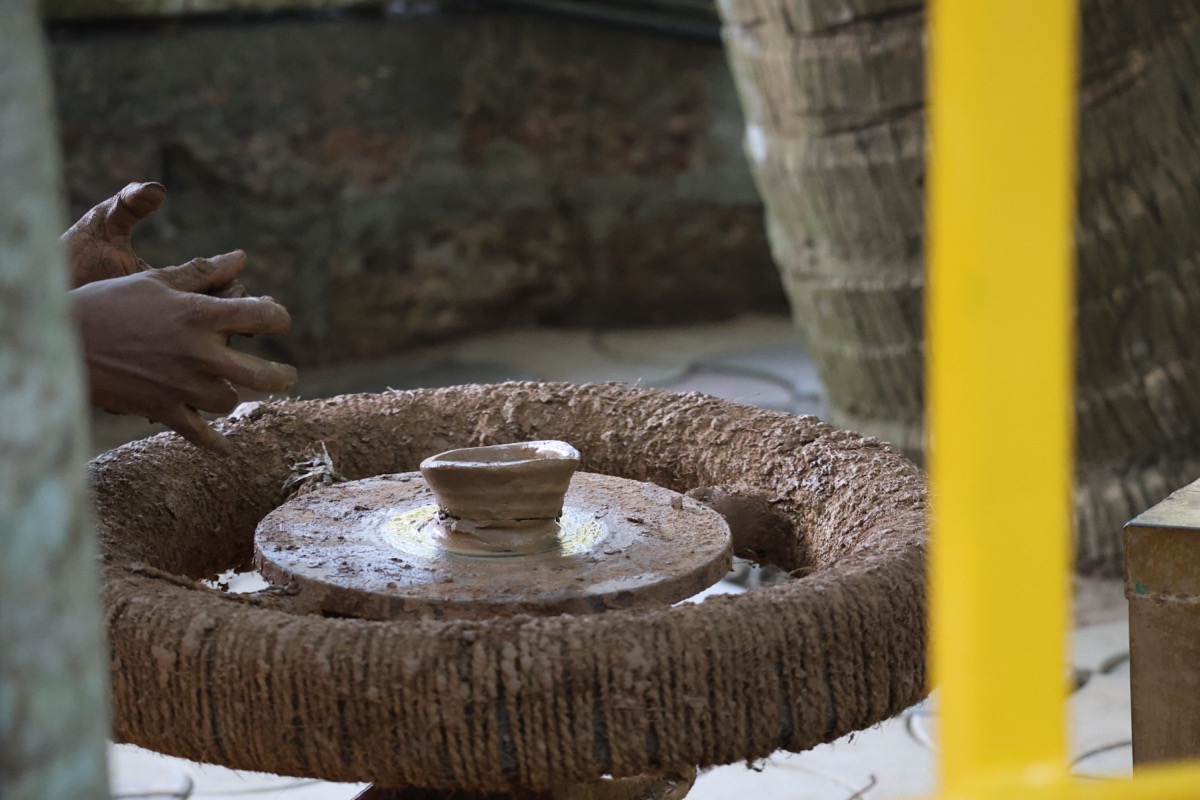
That physical difference, motor versus muscle, cascades into everything else.
Speed Control: Precision vs. Feel
Electric wheels win on consistency. Set a speed with the pedal, and that wheel holds steady while you center a stubborn lump of clay. Need to slow down for trimming? Tap the pedal. Speed up for pulling a tall cylinder? Push down. The motor doesn’t get tired, doesn’t lose momentum, and doesn’t care how hard you’re leaning on the clay.
Kick wheels require you to maintain your speed while throwing. That sounds like a limitation, and in some ways it is. But experienced kick wheel potters will tell you something interesting. Once you develop the rhythm, your body learns to adjust speed intuitively. You feel the clay resistance changing and unconsciously modulate your kick. It’s less precise in a technical sense, but it connects your body to the wheel in a way that some potters find deeply satisfying.
The meditative quality of kick wheel throwing is real. There’s a rhythm to it, almost like walking or rocking in a chair. Your foot finds a beat, your hands settle into their movement, and the clay responds to this shared momentum. It’s not for everyone, but for potters who love it, nothing else feels quite right.
For a beginner? The electric wheel removes one variable. That matters when you’re already struggling to center clay for the first time. Adding “maintain consistent wheel speed” to the list of things your brain is juggling makes learning harder than it needs to be.
Cost: The Gap Is Real
Budget-friendly electric wheels run $150 to $400 on Amazon and are perfectly usable for home studios. You can find solid beginner options from brands like Huanyu, VEVOR, or Shimpo Aspire that will handle everything a new potter throws at them, literally.
Kick wheels are a different story. New kick wheels are surprisingly expensive, $800 to $1,500 or more from specialty manufacturers. The good news is that used kick wheels are often available through Craigslist, Facebook Marketplace, pottery community groups, and estate sales for a fraction of the cost. A well-built kick wheel can last decades with minimal maintenance, so a used one is often just as good as new.
If you’re handy, you can even build one. The concept is straightforward: a heavy flywheel, a shaft, a bearing, and a seat. Some potters build kick wheels from bicycle parts, old washing machine drums, or poured concrete. It’s one of the few pieces of pottery equipment you can realistically DIY.
Maintenance and Durability
Here’s an area where kick wheels genuinely shine. With no motor, no wiring, and very few moving parts, there’s almost nothing to break. A kick wheel from the 1970s can run just as smoothly today as it did the day it was built. The most common maintenance task is an occasional bearing check, maybe a new belt every decade. That’s about it.
Electric wheels have more potential failure points. Motors can burn out, foot pedals can malfunction, and wiring can corrode. That said, most modern electric wheels from reputable brands are well built and will give you years of reliable service with basic care. Just keep the splash pan clean, don’t let water drip into the motor housing, and you will be fine for a long time.
Studio Use vs. Home Use
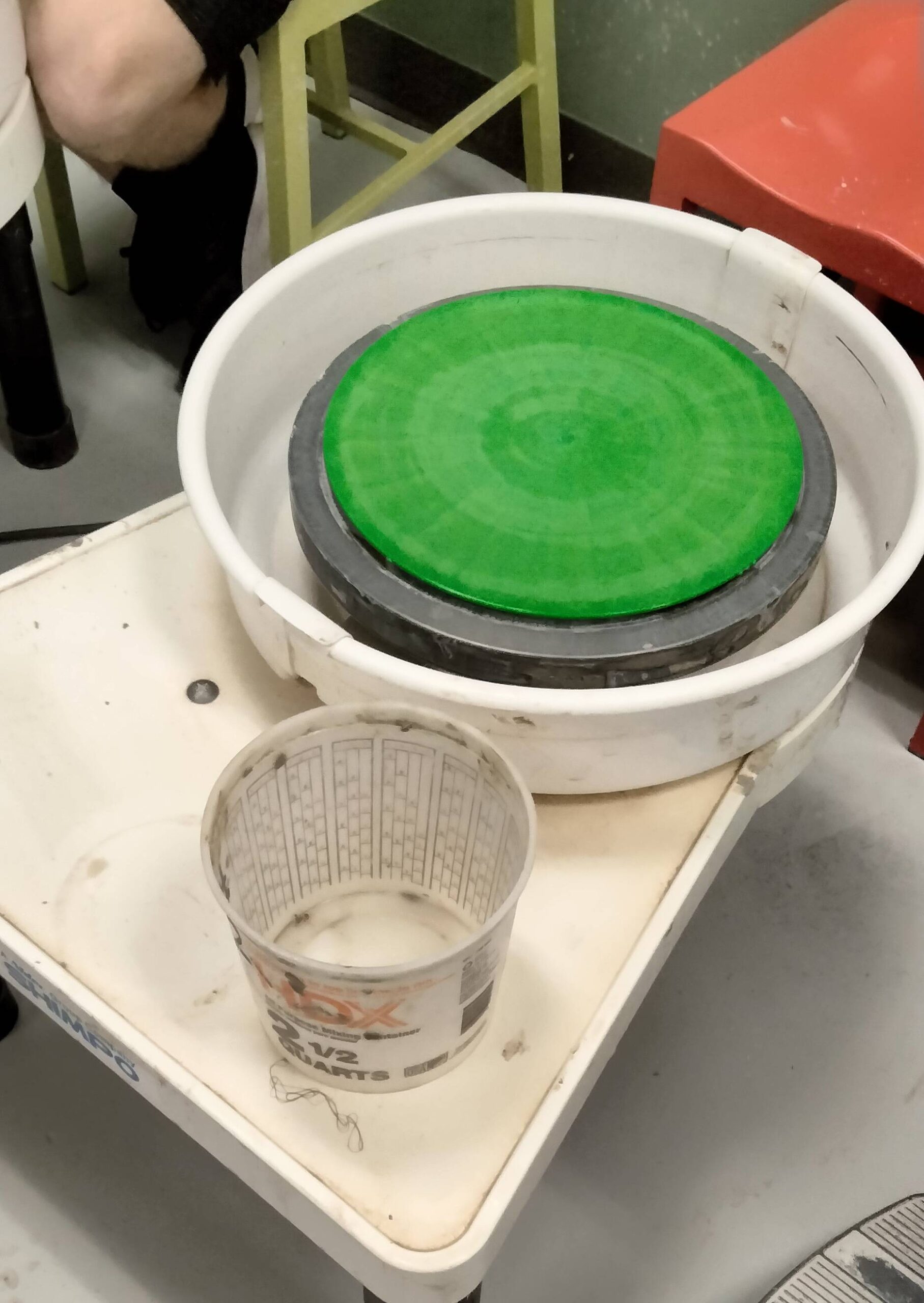
This is where the practical differences really show up. Electric wheels are quiet, compact, and work in small spaces. You can put one in a spare bedroom, a garage corner, or an apartment balcony and throw at any hour without disturbing anyone. Most electric wheels weigh between 40 and 70 pounds, manageable for one person to move if needed.
Kick wheels are big and heavy. That flywheel weighs 50 to 100 pounds on its own, and that’s before counting the frame, seat, and wheel head. Fully assembled, a kick wheel can top 150 pounds. They take up meaningful floor space. They’re not loud, exactly, but the rhythmic thumping of the kick mechanism can be heard through walls and floors. Your downstairs neighbor will know when you’re throwing.
If you have a dedicated studio space with room to spare, a kick wheel fits right in. If you’re working out of your apartment, an electric wheel is practically the only option.
Which Wheel Should You Actually Buy?
Buy an electric wheel if: you’re a beginner, you’re working from home with limited space, you want to focus entirely on throwing technique without managing wheel speed, or you plan to do a lot of trimming where consistent speed matters.
Buy a kick wheel if: you have a dedicated studio space, you value the physical connection of a traditional craft, you want equipment that lasts a lifetime with minimal upkeep, or you find the rhythmic meditative quality of kicking appeals to you.
The honest recommendation for most people: start with an electric wheel. Learn to center, throw, and trim without the added complexity of kick rhythm. Once you’ve built real skill and you know pottery is a long-term commitment, try a kick wheel at a community studio or workshop. If the experience clicks with you, and it does for a lot of potters, you’ll know. And at that point, finding a used one at a fair price won’t be hard.
The Best Wheel Is the One You’ll Use
This debate gets passionate in pottery circles, and both sides have legitimate points. Electric wheels are practical and accessible. Kick wheels connect you to centuries of ceramic tradition. But here’s what matters more than any comparison: which wheel will get you to sit down and throw more often?
A kick wheel gathering dust in the garage because it’s too heavy to move is worse than a $200 electric wheel that gets used three times a week. Pick the one that fits your space, your body, and your lifestyle, then spend your energy on the clay, not the equipment debate.
Happy throwing. 🏺